The very first time I ran a full-building emptying in a blended office and stockroom website, the largest surprise had not been the alarm system tone or the smoke machine in the stairwell. It was just how people acted under stress and anxiety. Some froze at their desks, others tried to finish emails, and our most certain supervisor struggled to make decisions when the radio snapped with clashing records. That drill sealed a basic truth. Great tools matters, however well skilled wardens and a qualified chief warden issue much more. Choosing the ideal warden course and training format is not a line product for conformity. It is the foundation of a genuine emergency situation response.
This guide distills the information that companies, safety and security supervisors, and aiming wardens ask me all the time. We will take a look at exactly how the nationally acknowledged systems of proficiency align to genuine functions, what to get out of a quality company, whether to go with face to face, mixed, or on-line formats, and just how to make a training cycle that actually prepares people for the hour you wish never ever comes.
What the national units in fact imply on the ground
Across Australia, 2 systems carry most of the functional training load for workplace emergency action teams. PUA-FER005 and PUA-FER006 are greater than training course codes. They map to distinct duties and capability, and when made use of appropriately they provide your Emergency situation Control Organisation a common language and a clear structure.
PUAFER005, commonly noted as the puafer005 course or PUA-FER005 Run as part of an emergency control organisation, is the structure for every single warden. Think about it as the role-based spine of a fire warden course. It instructs how to carry out emergency situation response procedures, move an area, record standing, make use of a warden intercom phone or radio properly, aid individuals that need help, and coordinate with the chief warden without including noise to the system. In method, a skilled warden manages a flooring or area, not the whole building.
PUAFER006, the puafer006 course or PUA-FER006 Lead an emergency control organisation, targets the chief warden and replacement roles. This is management under pressure. The unit covers decision production in dynamic conditions, taking care of information flow, selecting suitable emergency strategies, communicating with emergency situation solutions, and finishing an occurrence securely with a head count and a document that withstands examination. The difference is significant. A warden complies with the plan for a defined area. A chief warden leads, adapts, and makes the call when conditions don't match the script.
The best companies anchor fire warden training and chief warden training to these systems while customizing content to your website's threats and systems. That positioning issues when auditors visit, but it matters even more when your deputy needs to run the program due to the fact that the chief warden is off site.
Roles, hats, and the signals individuals actually notice
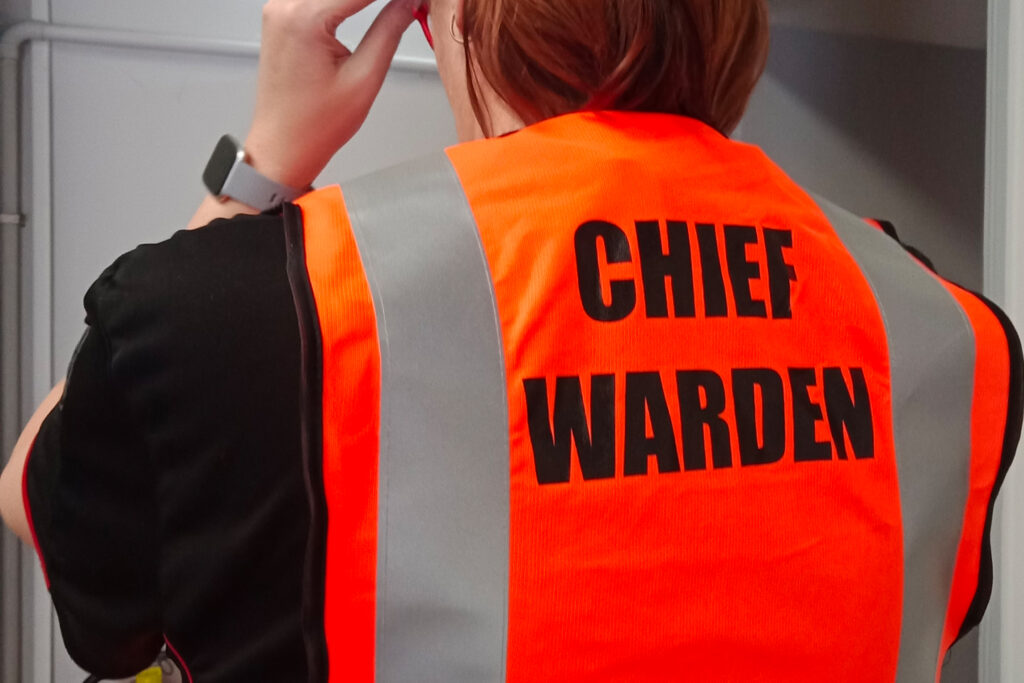
Visual hints assist when adrenaline spikes and speech turns untidy. That is why we still discuss fire warden hat colour and chief warden hat colours. Practices vary by industry and tradition method, but the usual pattern in Australia is easy to remember. Wardens put on red, communications or emergency treatment support might use environment-friendly if designated, and the chief warden uses white. If your website makes use of safety helmets, not soft caps or vests, the concern typically shows up in training: what colour helmet does a chief warden wear? Keep it crisp and regular across the site, preferably with clear phrasing on the helmet front and the high-visibility vest. A chief warden hat that is white, labeled plainly, and coupled with a white vest has actually saved me seconds throughout a drill that seemed like minutes.
Colour hints only work if people have actually seen them before the alarm. Include them in new starter inductions, floor talk posters, and brief refreshers.
Fire warden requirements in the workplace
The legislation does not spell out your lineup in step-by-step detail. It calls for a competent emergency situation control organisation suitable to the building's usage, size, and complexity, in addition to training and practice discharge drills. The practical fire warden requirements come down to coverage and capability.
Aim for a minimum of one warden per flooring or zone, with backups to cover leave, changes, and travel. High-risk locations like research laboratories, kitchens with gas home appliances, and assembly line require wardens on every change. In mixed occupancy buildings, arrangement on the chief warden obligation and common procedures is vital, whether you designate a structure chief warden or coordinate via a centers manager. The chief warden requirements include a dependable presence on website throughout running hours and authentic authority to route individuals in an emergency. If your chief warden works remote days, designate a deputy on contrary days and make that handover official. Chief fire warden duties expand beyond alarm systems. They should keep the ECO list, verify training money, check layout and warden equipment, and lead or delegate post-incident reviews after drills and real events.
Documentation underpins the entire structure. Keep a current warden checklist with get in touch with information, floorings, and changes. Maintain training records connected to PUAFER005 and PUAFER006 or equal discovering end results. Maintain your emergency situation feedback strategy so wardens can locate it rapidly, not buried in a common drive.
Matching course web content to your site risks
Generic slides about emergency situations do not prepare a team for ammonia leaks, lithium-ion battery fires, or a child care facility evacuation throughout snooze time. A worthwhile warden course maps your risks and your structure includes into the training. That consists of the location and type of fire extinguishers and fire coverings, just how the fire sign panel provides alarms, where the lawn sprinkler and hydrant areas split, and how staircase pressurization behaves in alarms. In one skyscraper I support, the voice warning system would escalate automatically in phases, which confused new wardens that anticipated a single tone. Our provider developed a short module with audio examples from that exact system. Confidence skyrocketed due to the fact that individuals recognized the sounds.
For an emergency warden course in a medical care or aged treatment setting, mobility support and progressive horizontal evacuation are decisive. Production sites gain from live extinguisher training using laser or gas-fired trainers, provided it is carried out in a controlled area with experienced supervision. Workplaces with many service providers need a particular method to mustering up and verification due to the fact that contractors often rest outside human resources systems.
A supplier that prices quote without inquiring about your structure drawings, occupant mix, or particular dangers is not preparing to train your group. Ask exactly how they will certainly contextualize PUAFER005 and PUAFER006 to your environment.
Choosing a carrier: signals of quality
I have actually discovered to look previous flyers and ask plain concerns. Suppliers are not equivalent, and the cheapest alternative can be pricey when it generates timid wardens who can not handle the first actual smoke warning.
Here are 5 markers I use to evaluate a fire warden training provider.
- Alignment to nationally acknowledged systems with clear analysis: Request their mapping to PUAFER005 Operate as part of an emergency control organisation and PUAFER006 Lead an emergency control organisation, including exactly how they examine performance, not just knowledge. Scenario-based evaluation defeats multiple-choice alone. Site-specific preparation: Excellent fitness instructors demand your emergency strategy, layout, and security system details prior to distribution. They verify discharge diagrams, setting up locations, and anybodies needing assistance. Instructor reliability: Trainers need to show both genuine event experience and adult education and learning skills. Fire solution history aids, yet educating under pressure is its very own craft. Attend a session if you can. Blended discovering done right: Pre-course eLearning should be lean, concentrated, and easily accessible on any gadget, with practical in-person practice for communications, sweeping, and leadership. A 3-hour read of policy PDFs is not mixed learning. Post-training assistance: Service providers who help with drill planning, chief warden refresher course situations, and post-incident debrief templates recognize that capability grows over time.
If you are in a multi-site business, ask whether they can provide consistency of web content and evaluation throughout regions while still customizing local details.
Format options: one-on-one, combined, or online only
Warden training works best when it mirrors the reality of an emergency: short ruptureds of clear guideline, followed by definitive activity and responses. That shapes exactly how you ought to pick the training format.
Face to encounter invests most time on functional tasks. Wardens practice making use of radios, sweeping a space, closing doors without securing them, routing stubborn colleagues to move, and reporting to the chief warden in simple language. For PUAFER006, the facilitator runs advancing situations where the chief warden gets clashing records, fire indicator panel simulate data changes, or a lift entrapment distracts sources. Individuals leave with muscular tissue memory they can remember under stress. The trade-off is calendar time and area setup.
Blended knowing pairs short eLearning components for theory with targeted in-person drills. It is my recommended version in many workplaces. Wardens finish the academic elements online, including emergency color codes, alarm states, and extinguisher fundamentals. After that the on-site session focuses on treatment walk-throughs and occurrence simulations. It reduces disturbance and maintains the useful components energetic. For an emergency warden course duplicated yearly, a limited 60 to 90-minute functional refresher course functions when the concept is revitalized on-line beforehand.
Online just has a slim function. It can act as a stopgap for remote areas or as an acting refresher course, yet it can not deliver the interaction and management method demanded by PUA-FER006, and it shortchanges brand-new wardens under PUAFER005 who have never removed a floor or managed a radio. Use it moderately and pair with a drill as quickly as possible.
Frequency and currency: how frequently to train
Most services settle on a 12-month cycle for warden training and a 6 to 12-month cycle for discharge drills. In high turn over atmospheres or where the structure changes usually, move closer to 6 months for drills and 12 months for wardens. When performance in drills delays, reduce the void to re-energize the team and develop momentum. Keep an eye on timing for brand-new beginners and newly designated wardens. Waiting eight months for the following set up training course leaves a gap. Arrange a catch-up session or fast-track a small group.
Chief warden training benefits from more regular situation practice, also if casual. A 20-minute tabletop workout once a quarter keeps decision-making muscles from atrophying. PUAFER006 material includes management under pressure for a reason. Without use, that edge dulls.
Assessment that mirrors genuine pressure
Competency indicates greater than recalling discharge paths. For PUAFER005, I expect a warden to show a full move of a defined location, recognize and help an individual who requires aid, provide a concise situation record, and muster securely. Errors are teachable minutes, however the assessment has to be authentic.
For PUAFER006, the chief warden should lead the ECO with a substitute case from very first alarm system to all-clear or handover to emergency situation solutions. They ought to translate panel details, handle radio channels, allot wardens, make a tactical choice, and record critical timestamps. Trainers that can present overlapping injects without transforming the session into theater provide the very best discovering problems. One supplier I rely on utilizes a basic clock forecast and scripted radio injects to simulate the haze without overwhelming participants.
Equipment and tiny information that make a huge difference
Consistency and simpleness conserve time. Outfit wardens with the same design of radio where feasible, classified by area or floor. Program networks to match your building areas and keep channel calling regular with representations. Store warden hats and vests in a noticeable, accessible location. If making use of headgears, verify they fit with PPE or religious head coverings. The chief warden hat need to be apparent. White is the standard for a chief warden hat or headgear, which responds to the perennial concern about chief warden hat colour and the chief fire warden hat colour without argument. Combine the hat with a printed function card clipped to the vest that outlines preliminary actions and radio phone call structure.
Printed floor sweep sheets with the names of well-known mobility-impaired owners help wardens prevent uncertainty. A small laminated card on extinguisher option minimizes doubt without inviting heroics. Training ought to strengthen that wardens are not firemens. Extinguish only if risk-free to do so, with a clear departure at your back, and only on incipient fires.
Integrating contractors, site visitors, and hybrid work
Modern workplaces extend throughout home desks, satellite workplaces, and websites with contractor-heavy head counts. Fire warden requirements in the workplace should adapt.
For crossbreed workplaces, update the ECO roster to mirror genuine tenancy patterns. Appoint wardens to core days and back-up wardens to contrary days. Make duty lineups visible in the common calendar. For contractors, develop warden protection right into purchase and website gain access to. Professionals should know the assembly location, the warden structure, and exactly how to report problems. Visitor monitoring systems should publish setting up details on badges. In multi-tenant structures, work with an usual alarm response with the structure supervisor to avoid contradictory guidelines. A chief emergency warden for the structure need to be recognized, with tenant chief wardens in support.
The chief warden duty: beyond the checklist
A qualified chief warden brings tranquil to mayhem. Chief warden responsibilities stretch from intending with to after-action records. That consists of keeping the ECO framework and get in touch with listings, organizing and joining drills, straightening with the building's Fire Sign Panel vendor on fundamental user interface knowledge, and seeing to it discharge layouts match fact after fit-outs. During an event, chief fire warden responsibilities include establishing control, setting radio discipline, validating risk-free egress courses, and making a decision when to isolate an area or draw a full evacuation. Later, they lead a reasonable testimonial. What worked, what requires taking care of, and who requires extra support. Chief fire warden requirements are partially technological, mainly human. They require confidence, authority, and the humbleness to update the plan when it falls short.
If you are checking out a chief warden course for a person recently promoted or tackling facilities obligations, choose a program that offers situation coaching, not just talks. Chief fire warden training that uses your actual site plans builds memory you can count on.
Making sense of pre-learning and micro-credentials
Some suppliers unbundle finding out into micro-credentials or brief modules. Utilized well, this lets you keep PUAFER005 and PUAFER006 fresh with targeted refreshers. A 20-minute module on alarm states and voice warning series, a 15-minute wrap-up on P.A.S.S. for extinguisher usage, or a quick drill on radio style all help. Prevent bloat. Pre-course material must hardly ever go beyond an hour for wardens and 90 minutes for primary wardens. Individuals maintain much better when concept lands close to https://www.firstaidpro.com.au/course/puafer005/ exercise. Tie conclusion to schedule welcomes for drills and practical sessions so momentum carries through.
Cost versus worth: invest where it counts
Budgets are actual. Still, I suggest spending on 3 levers that in fact boost outcomes.
First, placed cash into trainer top quality and site-specific preparation. Second, schedule functional time that includes realistic situations, not simply walk-throughs. Third, develop a light but consistent refresh cycle right into your year so skills do not fade. You can conserve by centralizing eLearning and design templates across sites, however do not skimp on the in person moments where courage and clarity are built.
How to inform your carrier prior to training day
A solid pre-brief collections the phase for significant training. Share your emergency situation plan, warden checklist, floor representations, and any kind of recent case knowings. Flag well-known obstacles like locked interconnecting doors, safe and secure laboratories, or mezzanines with single exits. Confirm setting up locations, back-up assembly locations, and any shelter-in-place circumstances appropriate to your site. If you have multilingual team or areas with hearing defense, the carrier can adjust drills as necessary. The difference between a memorizing session and a transformative one frequently hinges on this preparation.
What a well-run training day really feels like
The room format is easy, with representations on display screen and hats noticeable. The fitness instructor establishes assumptions swiftly, after that relocates the team into short cycles of instruction and activity. For wardens in PUAFER005, that appears like location sweep drills, mock door checks, and radio method. For PUAFER006, the session develops into a scenario where the chief warden collaborates multiple wardens, takes care of an intensified alarm, and communicates with a mock fire solution officer. Everybody obtains comments. The trainer notes where the plan aided and where improvisation was required. No one leaves not sure concerning the following step in a genuine event.
A sensible path for different workplaces
A tiny single-level office with 40 personnel can train 2 wardens and a chief warden, with one replacement, making use of a blended model. PUAFER005 for the wardens, PUAFER006 for the chief and deputy, plus a yearly drill and a quick refresher every 6 months. Keep a simple warden package near the main exit, and utilize a quarterly five-minute safety and security huddle to refresh setting up points.
A multi-tenant mid-rise needs a collaborated strategy. Each tenant appoints wardens under PUAFER005 and a lessee chief or deputy under PUAFER006, and the structure designates a chief emergency warden. Routine building-wide drills and radio channel discipline are important. Site signage need to be shared and regular. Chief warden hat colour and warden hat shades need to be lined up throughout occupants to avoid confusion.
A processing plant or stockroom with warm job, forklifts, and flammable dust requires depth. Each change needs several wardens, consisting of at the very least one with strong understanding of the plant. The chief fire warden course need to include operational risks and shut-down treatments. Drills must examine blocked departures and alternate assembly areas. Train protection or lodge teams in site visitor control so mustering data is reliable.
An institution or health care site shapes educating around protected-in-place decisions and discharges of people with limited movement or cognitive disabilities. The emergency warden training need to include patient or trainee transfer methods and the decision factors that divide a partial relocation from a full building evacuation.
Records that stand up and teach
Keep training records straightforward, exact, and retrievable. Web link names to roles, dates, devices of proficiency, and expiration or freshen days. Store drill reports with time stamps, case injects, and outcomes. The best drill records check out like narratives with timestamps, making it clear where decisions were made and what changed. In time these records end up being an inner book tailored to your building, far more beneficial than common guidance.
Common failing points and exactly how to avoid them
The most constant failings are shateringly common. Radios with level batteries or vague network tags. Wardens who hesitate to make use of strong language with associates. Principal wardens who talk to everybody and as a result to no one. Emptying representations that hang back fit-outs by a few months and send out people to the incorrect stairwell. Site visitors who vanish throughout the muster due to the fact that no person logged them in.
Prevent these with month-to-month radio checks and a phoned number channel card, role-play of assertive language in training, a clear command post for the chief warden, and a quarterly testimonial of evacuation diagrams versus existing flooring formats. For visitors, give reception groups a muster record and a list that takes a trip with the chief warden kit.

A brief contrast of duties, training, and visible identifiers
- Role and extent: Wardens manage areas and individuals activity. Principal wardens manage the entire occurrence and the ECO. Training units: Wardens complete PUAFER005. Principal wardens total PUAFER006, typically after or together with PUAFER005. Practical skills: Wardens sweep, report, help. Chief wardens lead, allocate, decide. Visible identifiers: Wardens wear red. The chief warden hat colour is white. Uniformity defeats creative thinking here. Refresh cycle: Wardens yearly with drills at the very least yearly. Chief wardens yearly plus brief circumstance refresher courses each quarter if possible.
Final thoughts from the drill ground
I have enjoyed great heads avoid panic and I have seen good individuals freeze. The difference is not fearlessness alone. It is technique, clearness, and a common strategy. Pick a provider who treats PUAFER005 and PUAFER006 as living competencies, not simply boxes to tick. Choose a layout that gives your people time on their feet, radios in hand, and decisions to make. Keep the hats and vests straightforward so in a group the right person stands out right away. Develop a rhythm of discovering that fits your workplace and your risks.

If your warden training leaves people seeming like they can act, speak clearly, and adapt when the unanticipated occurs, you picked well. If it leaves them with slides and unclear memories, adjustment course. Your next alarm system may not await a far better day.
Take your leadership in workplace safety to the next level with the nationally recognised PUAFER006 Chief Warden Training. Designed for Chief and Deputy Fire Wardens, this face-to-face 3-hour course teaches critical skills: coordinating evacuations, leading a warden team, making decisions under pressure, and liaising with emergency services. Course cost is generally AUD $130 per person for public sessions. Held in multiple locations including Brisbane CBD (Queen Street), North Hobart, Adelaide, and more across Queensland such as Gold Coast, Sunshine Coast, Toowoomba, Cairns, Ipswich, Logan, Chermside, etc.
If you’ve been appointed as a Chief or Deputy Fire Warden at your workplace, the PUAFER006 – Chief Warden Training is designed to give you the confidence and skills to take charge when it matters most. This nationally accredited course goes beyond the basics of emergency response, teaching you how to coordinate evacuations, lead and direct your warden team, make quick decisions under pressure, and effectively communicate with emergency services. Delivered face-to-face in just 3 hours, the training is practical, engaging, and focused on real-world workplace scenarios. You’ll walk away knowing exactly what to do when an emergency unfolds—and you’ll receive your certificate the same day you complete the course. With training available across Australia—including Brisbane CBD (Queen Street), North Hobart, Adelaide, Gold Coast, Sunshine Coast, Toowoomba, Cairns, Ipswich, Logan, Chermside and more—it’s easy to find a location near you. At just $130 per person, this course is an affordable way to make sure your workplace is compliant with safety requirements while also giving you peace of mind that you can step up and lead when it counts.